How it works
The operating flow
Every significant decision, action, or artefact, human or AI, is checked against your Intent, recorded, and used to improve the next.
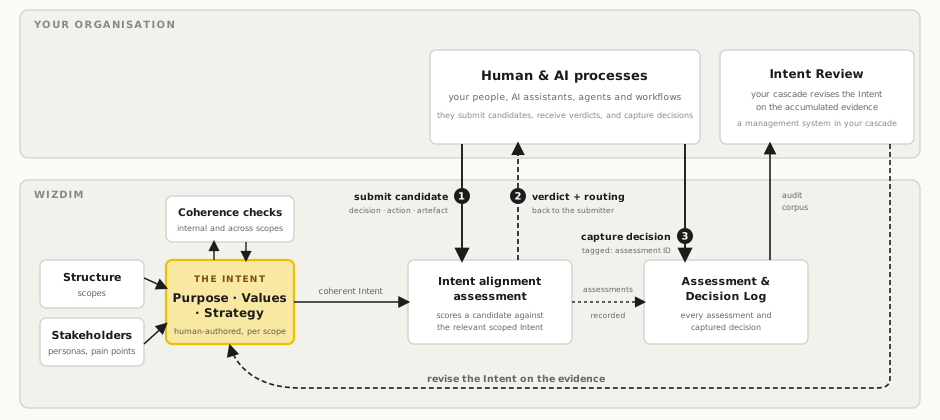
Every assessment is recorded and linked by ID, so the routed decider can differ from the submitter. Intent Review is a management system that revises the Intent on the accumulated evidence.
The artefacts
Structured, queryable, and auditable data assets
Stakeholders
Personas, pain points, and desires.
Purpose
A timeless statement of intent.
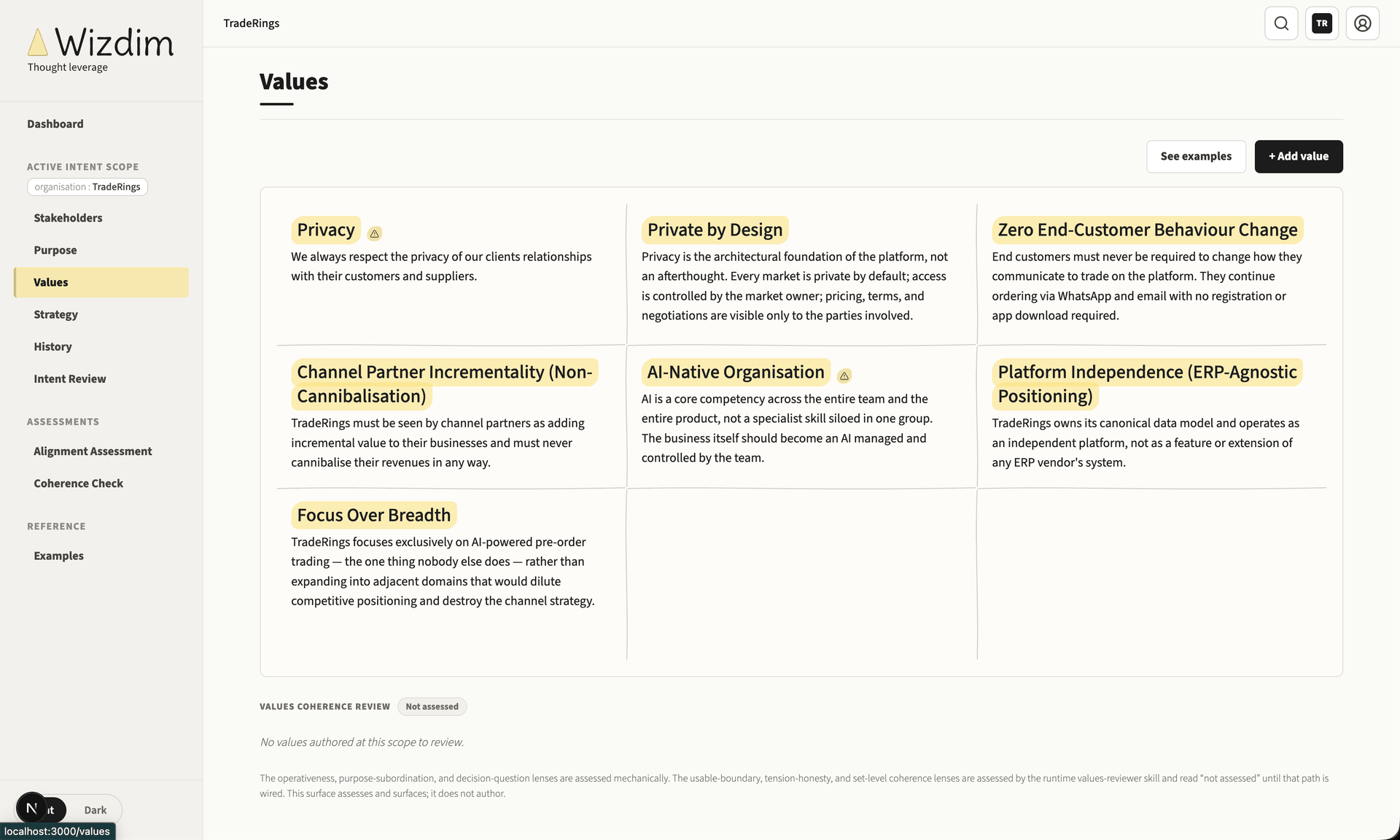
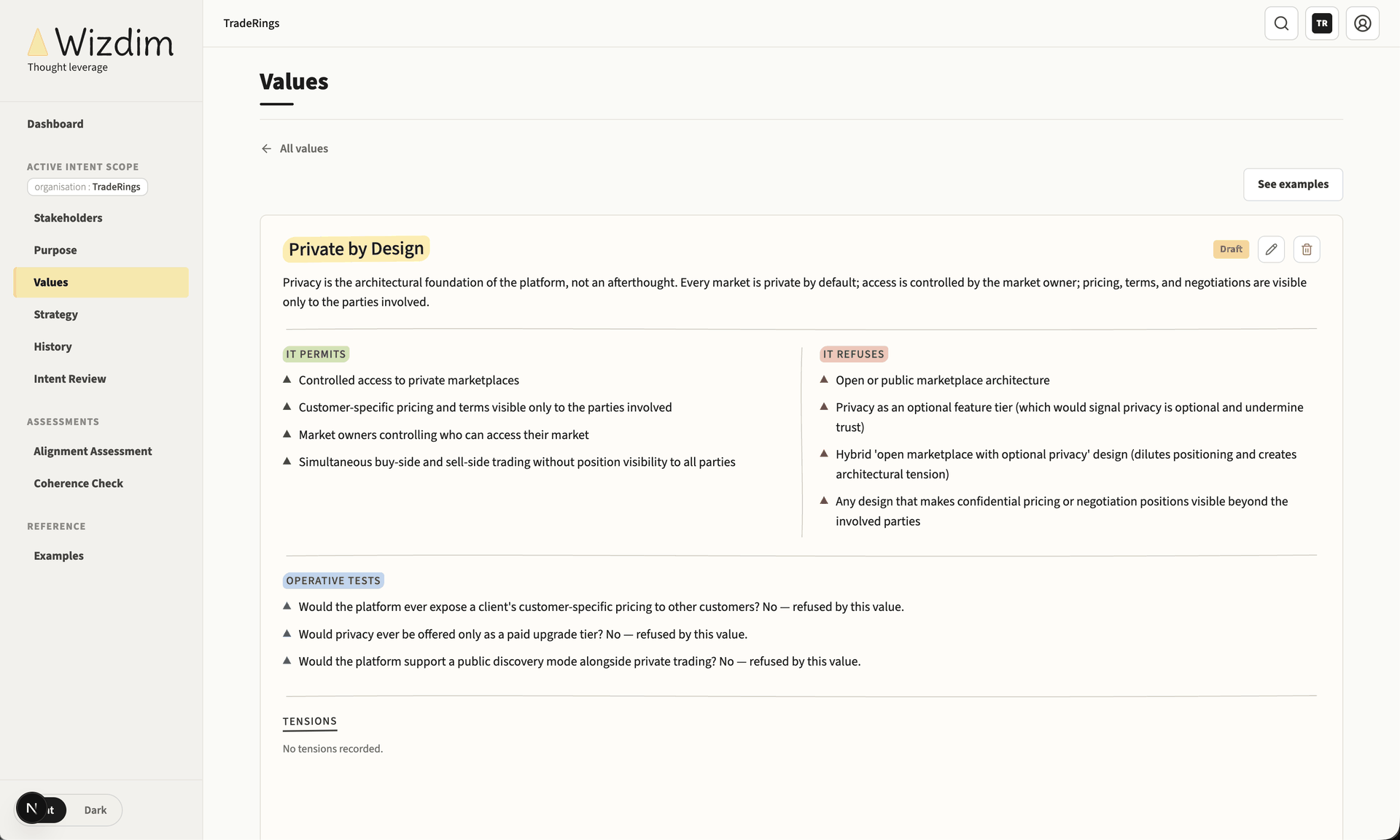
Values
Binding definitions that permit and refuse.
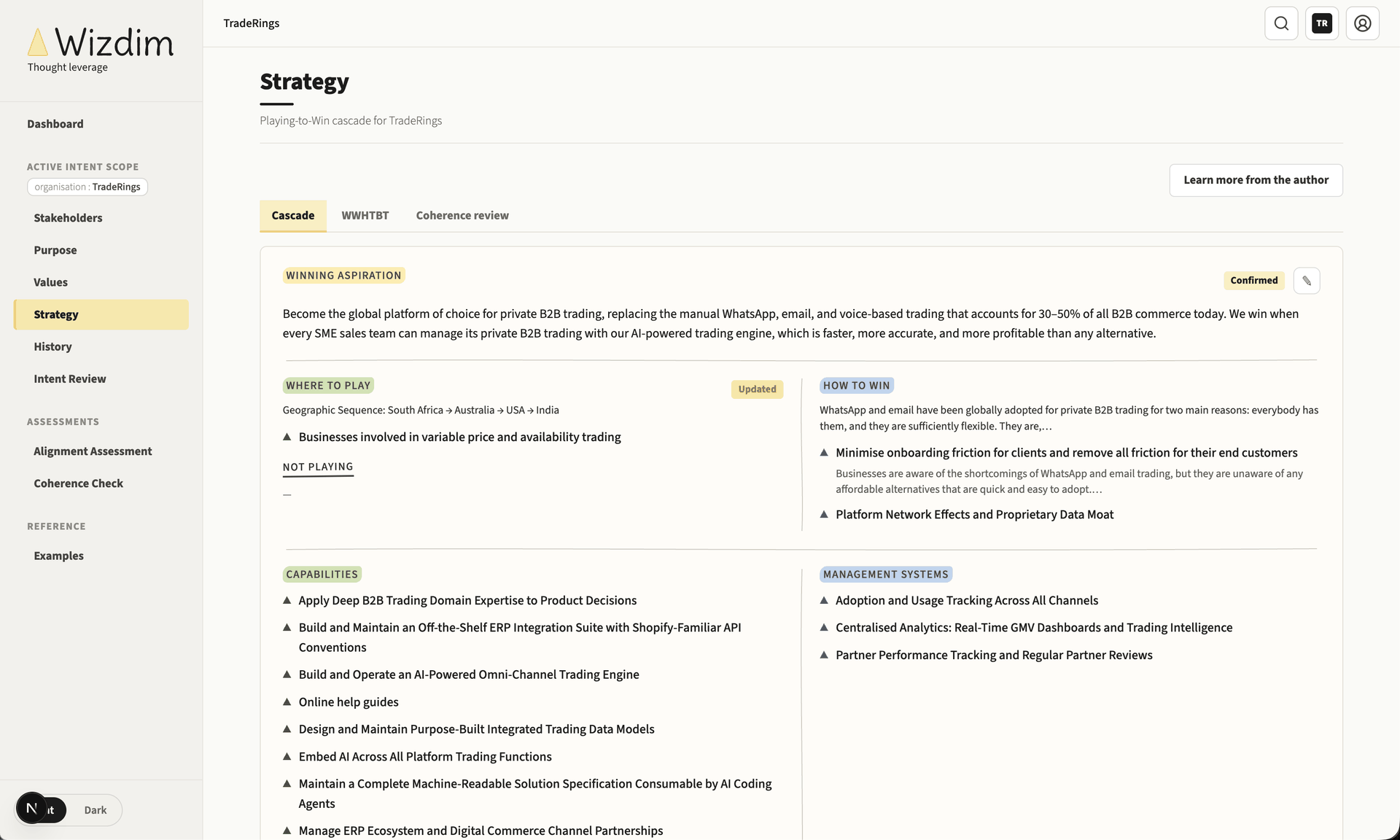
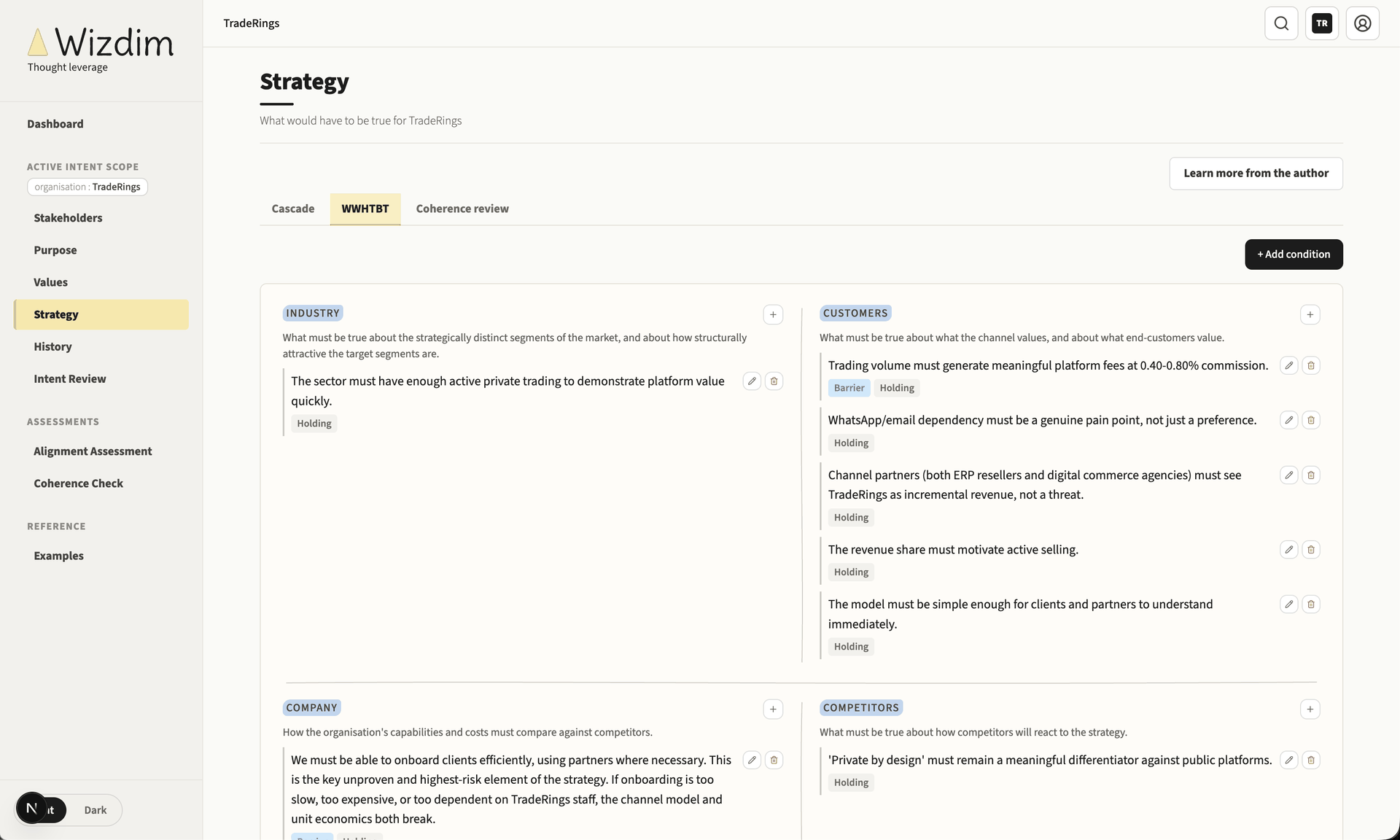
Strategy
Roger Martin’s Playing to Win choice cascade.
WWHTBT conditions.
Alignment assessment verdicts
Verdicts and decision routing.
Decisions
Operational decisions captured for assessment.
Purpose and the Winning Aspiration
Strategy methodologies tend to compress purpose into a commercial slot, a Winning Aspiration, but the two are not the same thing.
Purpose answers why the business exists at all. It is timeless: a fundamental objective, regardless of strategy, market conditions, or commercial pressure. The Winning Aspiration is the commercial expression of purpose for the current strategic horizon, time-bounded, typically three to five years, in service of the purpose.
Purpose can outlive multiple Winning Aspirations, preserving continuity through strategic pivots. It also gives the Intent alignment assessment two distinct reference points: a candidate decision is checked against both, and the failure modes differ.
A coffee company's purpose, to make the world's mornings better, may outlive successive Winning Aspirations, from leading speciality retailer in three African markets to expansion into five European cities, without changing identity.
Values follow the same additive logic: binding elements of Intent, not published sentiment. A value is only operative if it would refuse some action the business would otherwise be tempted to take.
The console
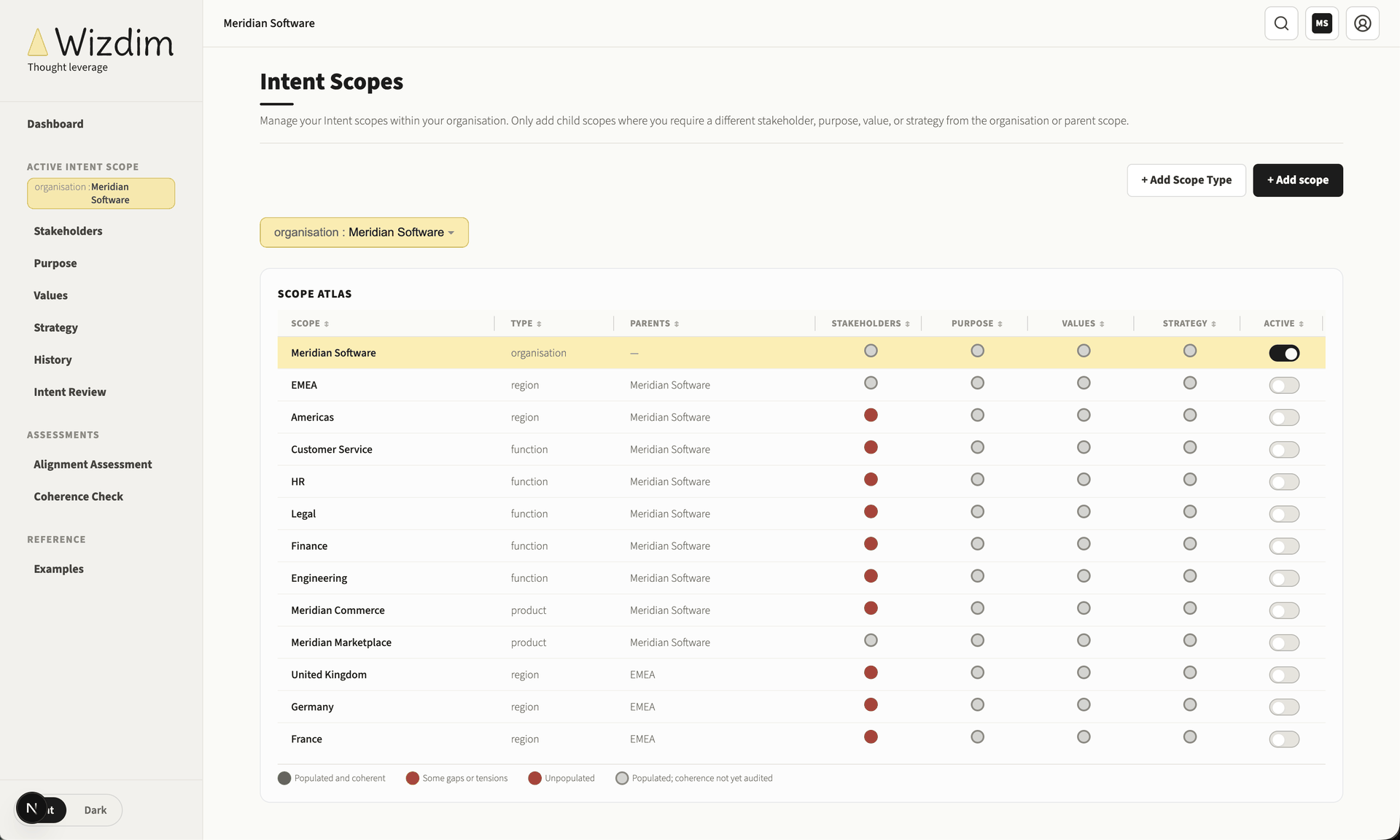
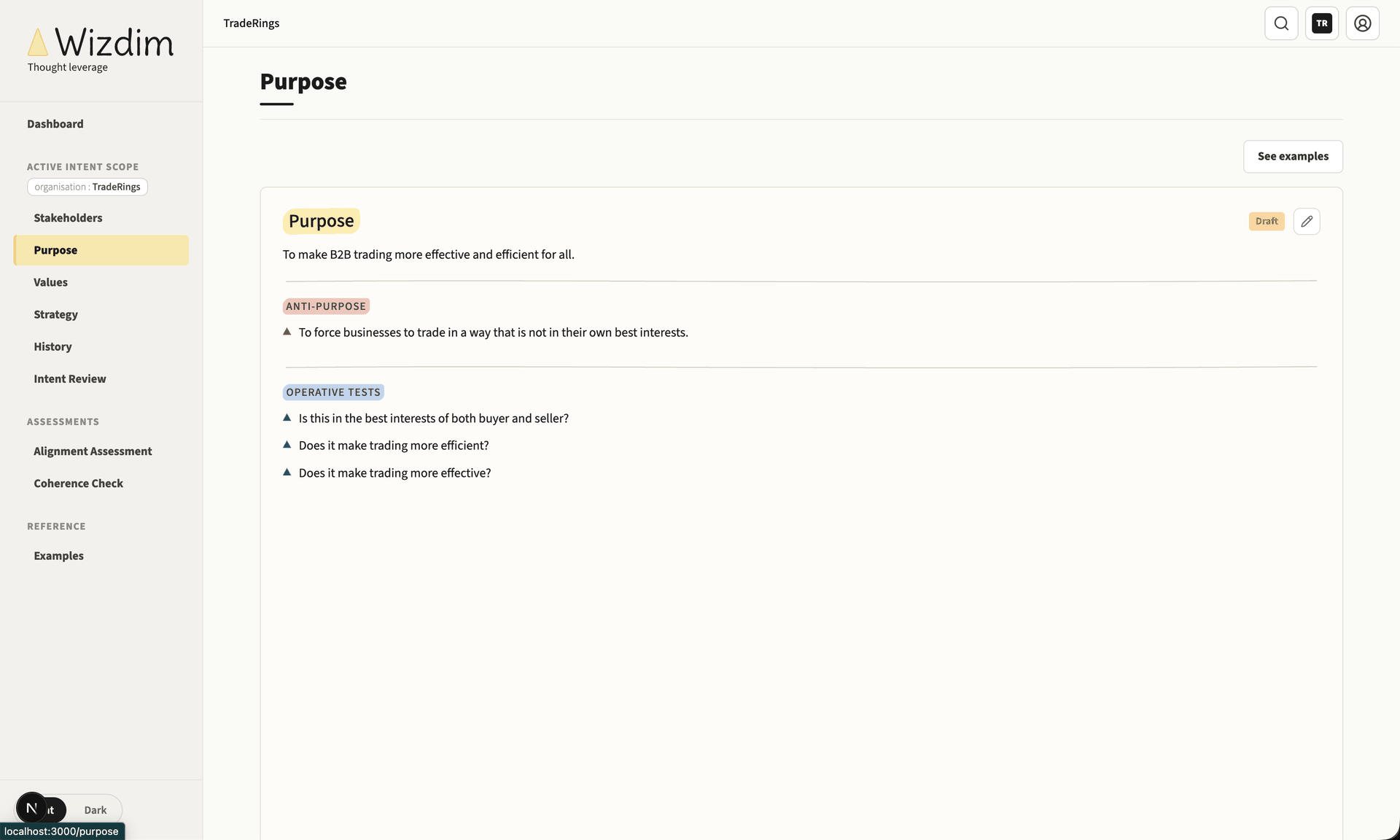
A working product, considered and real.
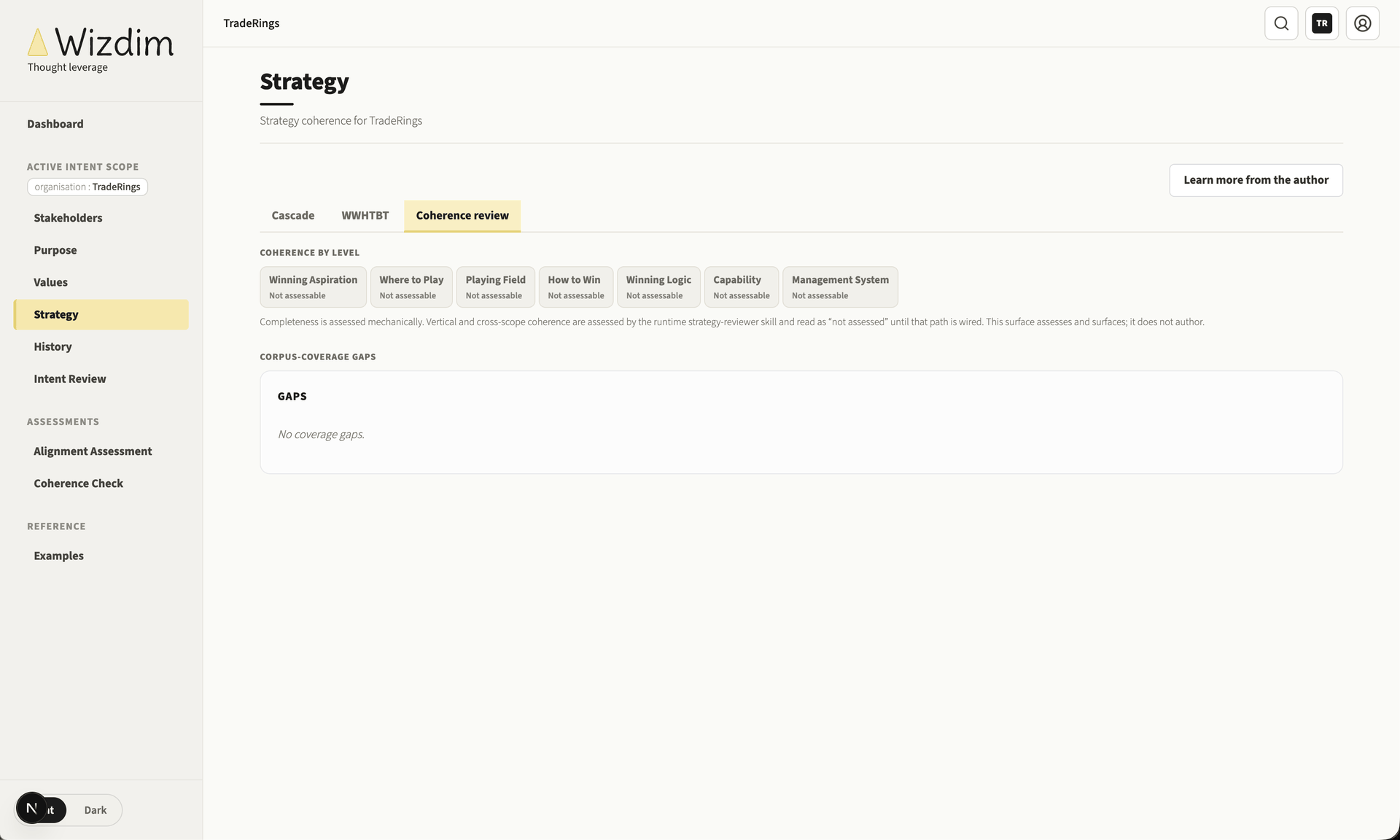
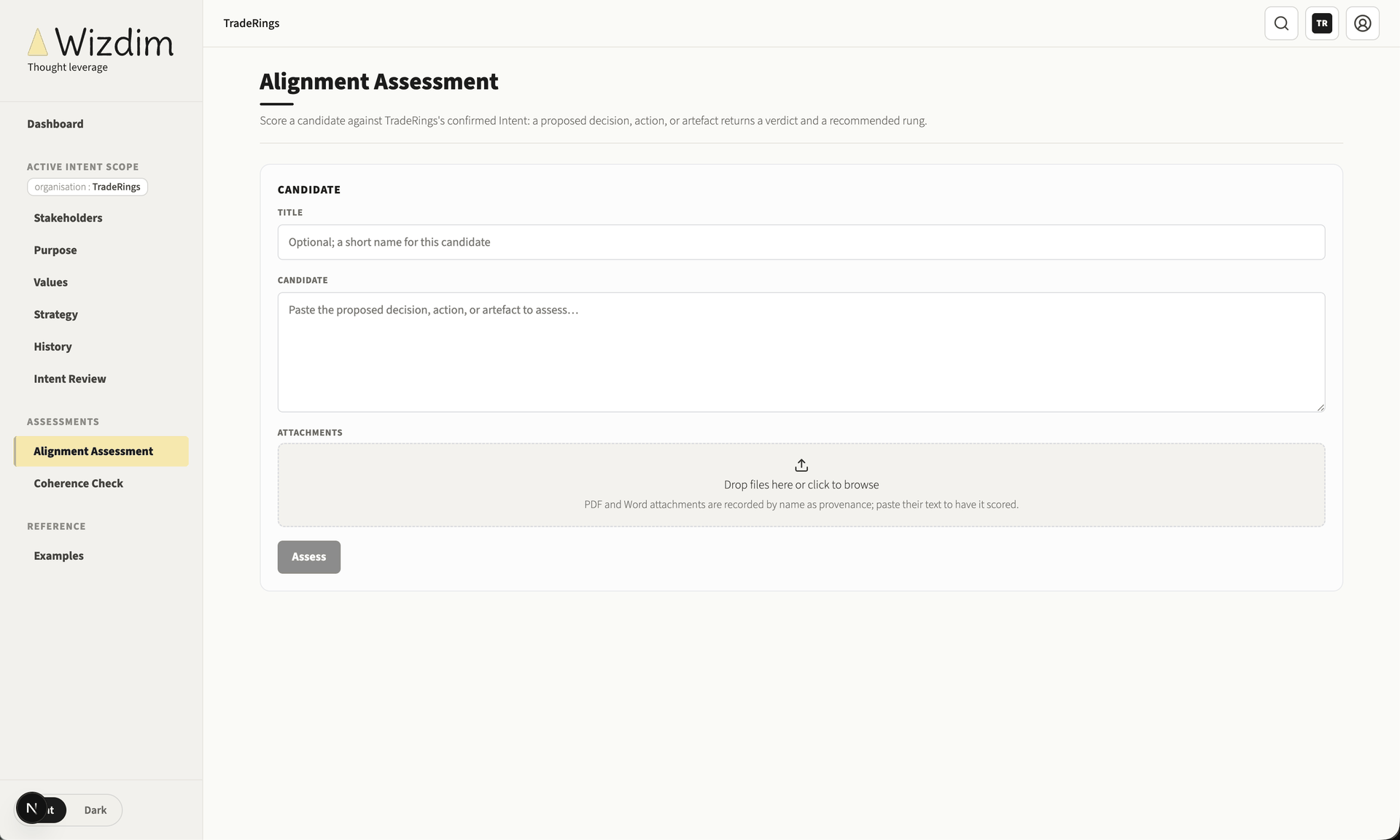
Accessible from anywhere
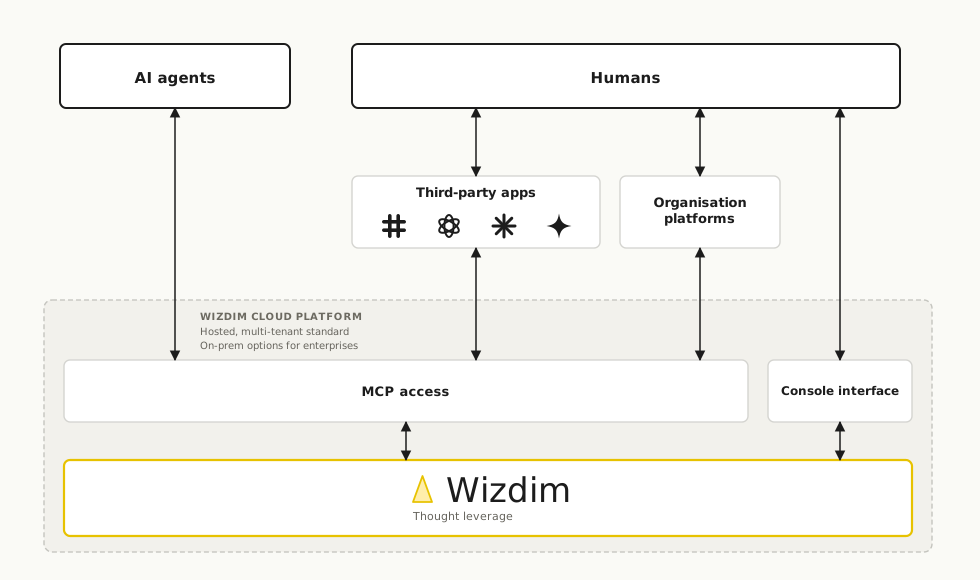
People reach the engine through the console and the tools they already use. AI agents reach it through the MCP endpoint.